






Properly winterising your caravan isn’t about “parking it up and hoping for the best”. It’s about preventing damage while the van is not in use, especially from water, batteries, pests, mould, and stagnant systems.
Most expensive off-season damage happens because basic winterisation steps were skipped — not because caravans are fragile.
This guide walks you through how to winterise your caravan properly, step by step, so it’s ready to go when you are.
What You’ll Learn
- Why winterisation matters (even in mild climates)
- How to protect plumbing, appliances, and batteries
- What to clean, drain, and disconnect
- Common winter storage mistakes
- How to bring your caravan back out of storage safely
This guide is suitable for all caravan owners, including first-timers.
Why Winterising Your Caravan Is Important
During storage, caravans are vulnerable to:
- Stagnant water and biofilm buildup
- Cracked fittings from residual water
- Battery degradation
- Mould and condensation
- Pest and insect ingress
Winterisation is about damage prevention, not just cleanliness.
Step-by-Step: How to Winterise Your Caravan Properly
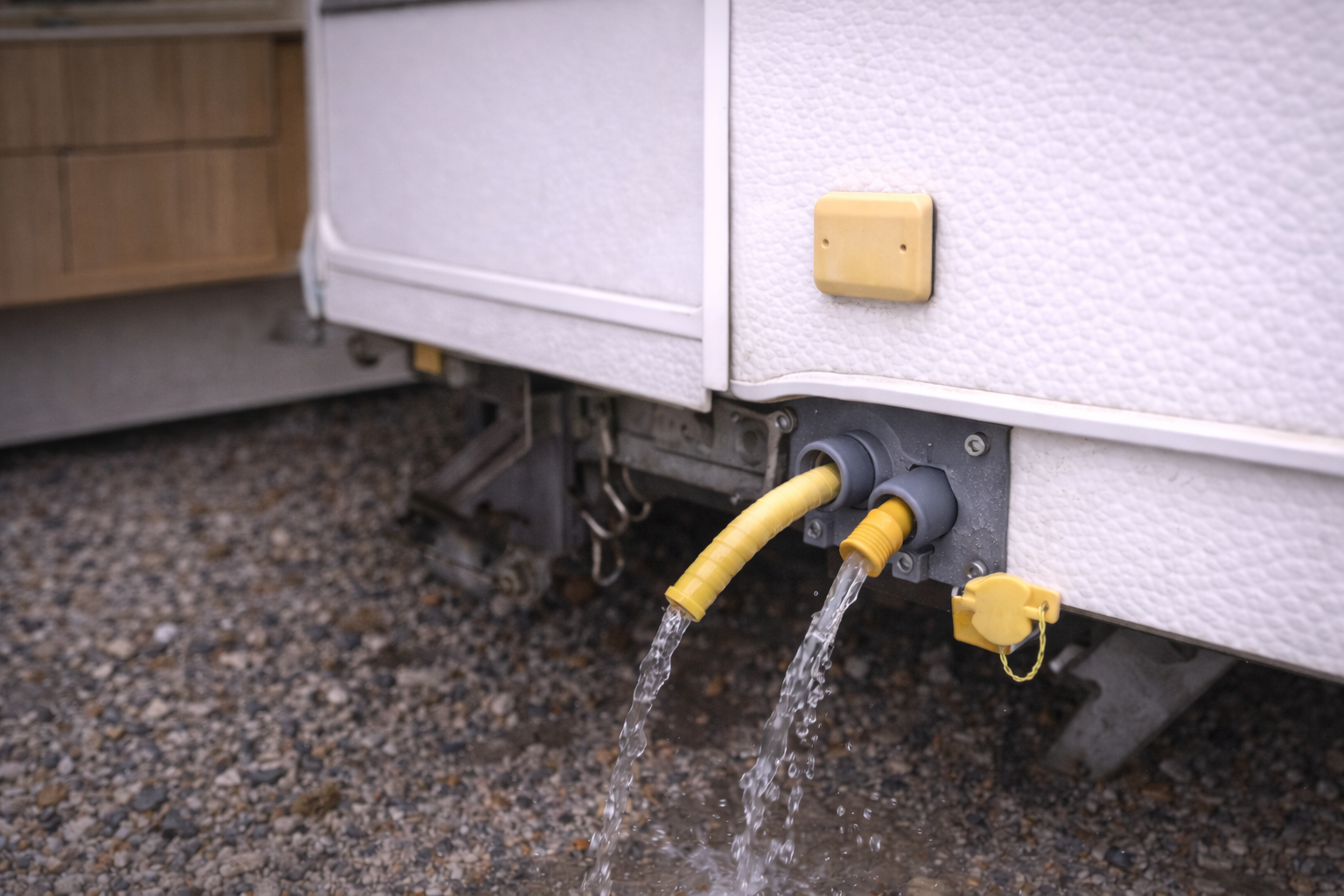
1. Drain the Entire Water System
This is the single most important step.
Drain:
- Fresh water tanks
- Grey water tanks
- Hot water system
- Water pump and lines
Open all taps (hot and cold) to allow air in and water out.
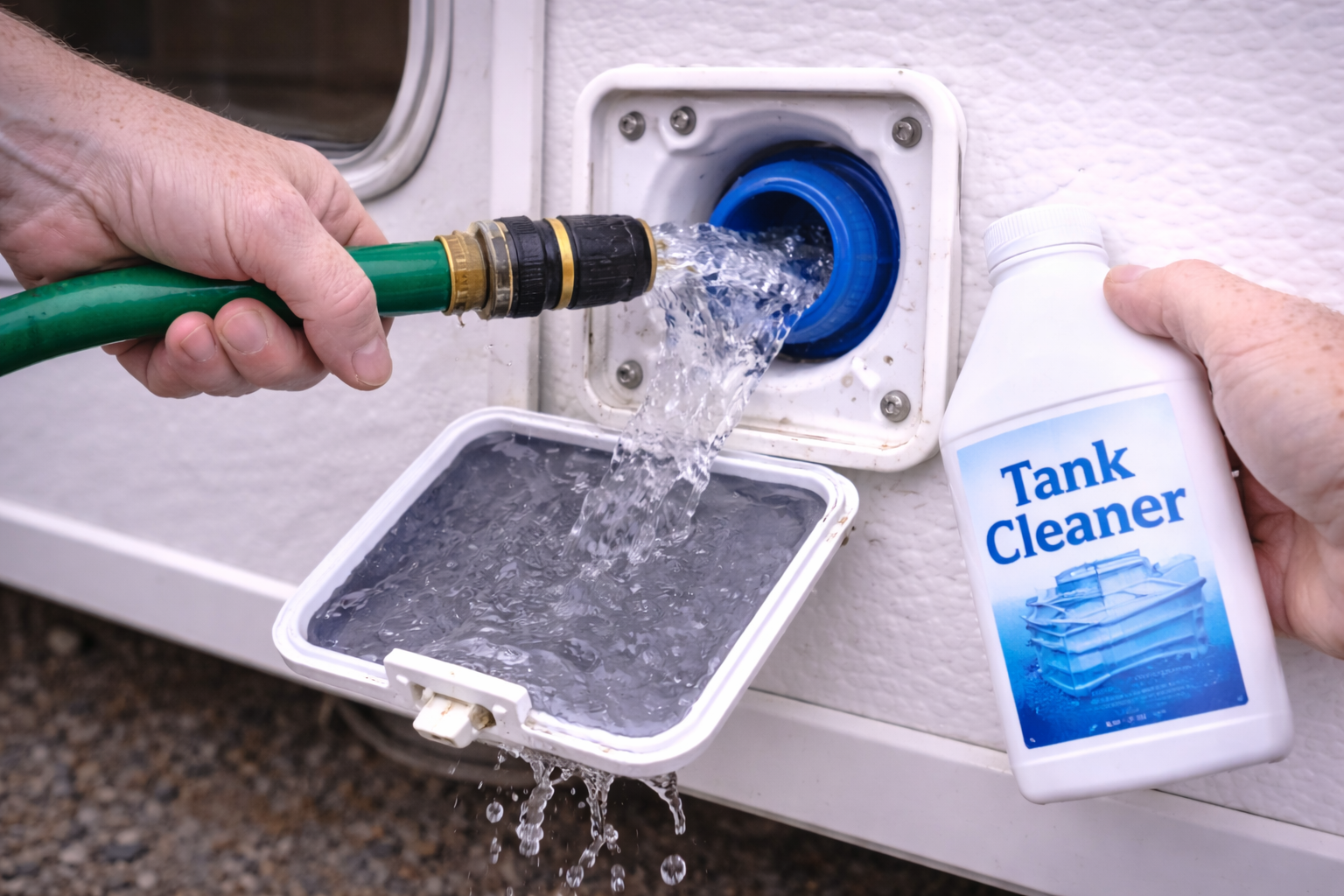
2. Flush and Clean Water Tanks (Optional but Recommended)
Before storage:
- Flush tanks with clean water
- Use a tank cleaner if contamination is suspected
- Drain completely again
This prevents algae, smells, and bacterial growth.
3. Empty and Clean the Hot Water System
- Turn off power and gas
- Allow system to cool
- Drain fully
- Leave drain plug or valve open
Never store a caravan with water left in the hot water system.
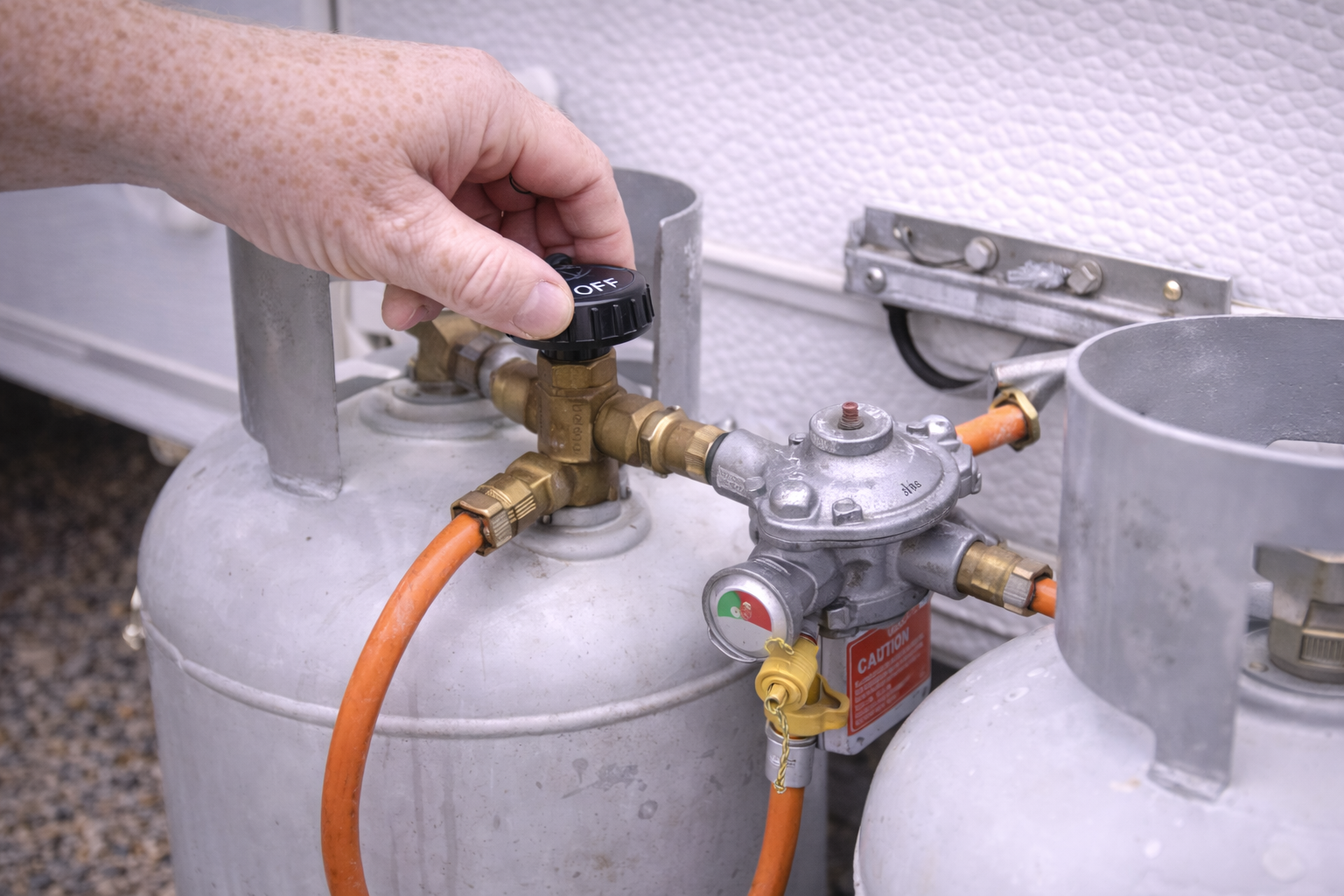
4. Turn Off and Isolate Gas Supply
- Turn off gas bottles
- Disconnect if storing long-term
- Fit dust caps if available
This prevents leaks and regulator issues during storage.
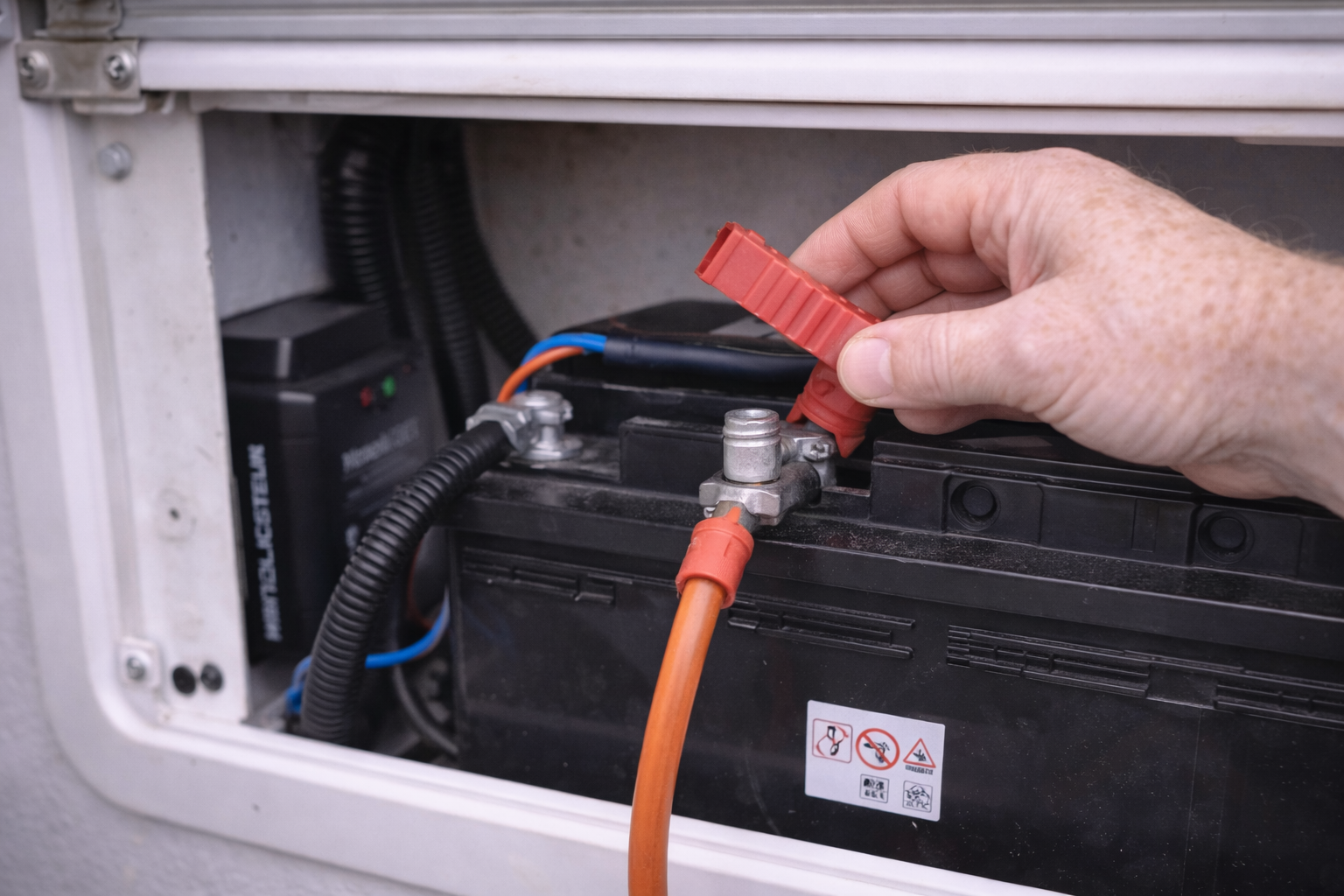
5. Protect the Battery and Electrical Systems
Options depend on storage length:
- Disconnect batteries
- Use a maintenance charger
- Remove batteries for long storage
Flat batteries shorten lifespan permanently.
6. Clean and Ventilate the Interior
Before closing up:
- Remove food and perishables
- Clean fridge and leave door ajar
- Wipe surfaces dry
- Use moisture absorbers if needed
Trapped moisture leads to mould and odours.
7. Inspect and Protect Seals and Openings
- Check windows, hatches, and door seals
- Repair any obvious gaps
- Close vents with breathable covers (if recommended)
This reduces moisture and pest entry.
8. Cover or Position the Caravan Correctly
- Use a breathable caravan cover if stored outside
- Avoid fully sealing airflow
- Park on level ground
- Use wheel chocks and release handbrake if recommended
Good airflow prevents condensation buildup.
Common Winterisation Mistakes to Avoid
- Leaving water in tanks or heaters
- Forgetting grey water systems
- Storing with fridge closed
- Leaving batteries flat
- Sealing the van completely airtight
- Assuming “short storage” doesn’t matter
Most damage happens during inactivity.
How Long Can a Caravan Sit Without Use?
With proper winterisation:
- Several months is fine
- Seasonal storage causes minimal issues
Without winterisation:
- Damage can start in weeks
Prevention always costs less than repair.
When to Do a Full Winterisation
You should fully winterise if:
- Storing for more than 4–6 weeks
- Parking outdoors
- Leaving the caravan unattended
- Previous moisture or plumbing issues exist
Short trips between uses require less, but not zero prep.
Key Takeaways
- Winterisation prevents hidden damage
- Draining water systems is critical
- Batteries need active protection
- Ventilation matters more than sealing
- A little prep saves major repairs
Next Steps
If your water system smells after storage:
How to Clean Caravan Water Tanks Before and After Storage
If leaks are suspected:
How to Detect and Fix Leaks in Caravan Plumbing
For full pre-storage servicing:


