





Cyclone season in Western Australia isn’t something you “ride out and see what happens”. High winds, driving rain, flying debris, and flooding can destroy caravans that aren’t properly prepared — even if they’re parked and unattended.
The key difference between minor damage and a write-off usually comes down to preparation, not luck.
This guide walks through how to prepare your caravan for cyclone season in WA, whether it’s stored at home, in a yard, or in a caravan park.
What You’ll Learn
- What cyclone season means for caravans in WA
- How wind and water damage caravans most often
- How to secure, seal, and protect your van
- What to remove, disconnect, or reinforce
- When relocation is safer than staying put
This guide is suitable for all caravan owners, especially those in northern and coastal WA.
When Is Cyclone Season in WA?
Cyclone season typically runs from:
- November to April
Highest risk areas include:
- Pilbara
- Kimberley
- Gascoyne
- Coastal and inland cyclone-prone zones
However, extreme weather can affect areas well outside the official cyclone tracks.
How Cyclones Damage Caravans
The main threats are:
- Wind uplift and overturning
- Flying debris
- Water ingress
- Flooding and ground saturation
- Long-duration exposure, not just peak winds
Most damage occurs before or after the cyclone itself, when wind and rain persist for hours or days.
Step-by-Step: Preparing Your Caravan for Cyclone Season
1. Decide: Stay Put or Relocate
First question to answer honestly:
- Is your storage location exposed?
- Is relocation possible?
If you can:
- Move the caravan inland
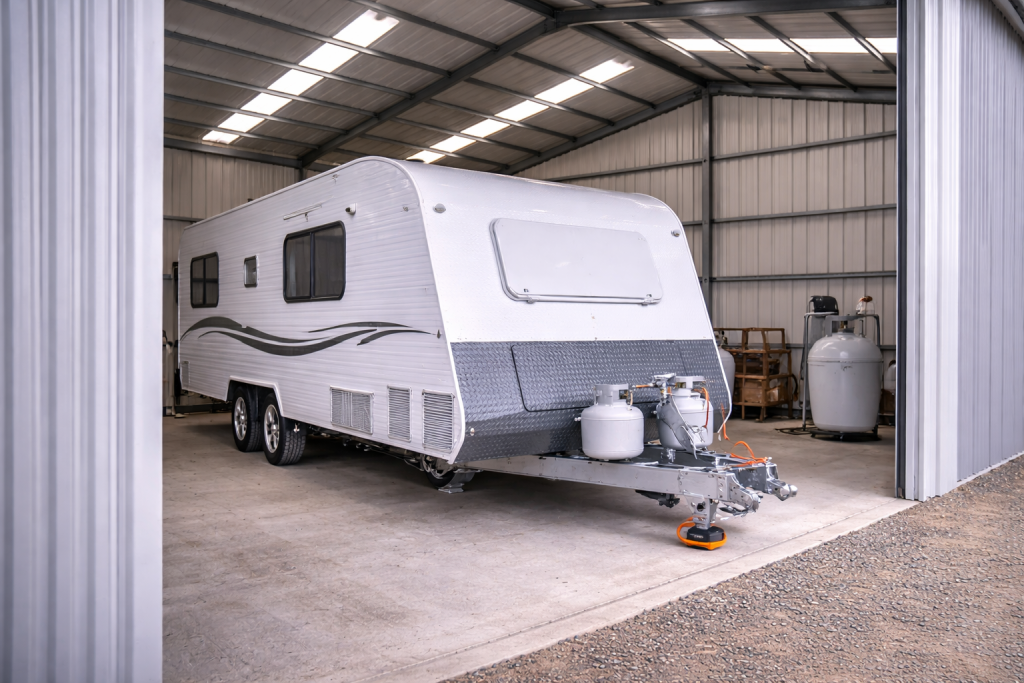
- Store it in a solid shed or cyclone-rated facility
That’s often the safest option.
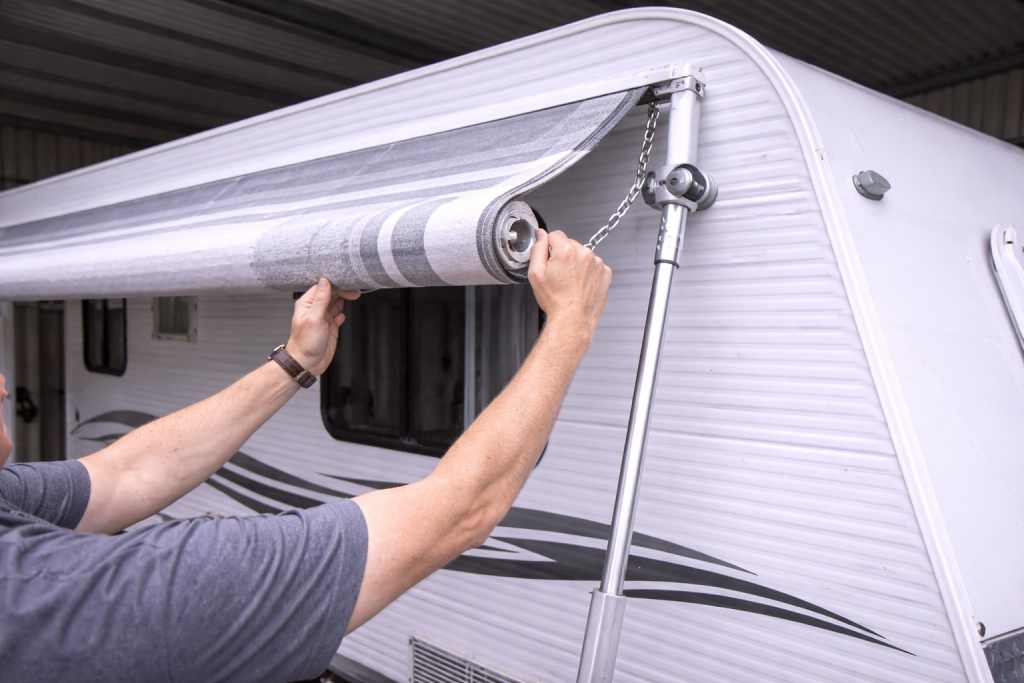
2. Remove or Secure Anything That Can Catch Wind
Wind damage escalates fast once something starts flapping.
Remove or secure:
- Annexes and awnings
- Anti-flap kits
- Loose covers
- Solar panel accessories (if removable)
- Outdoor furniture
Never rely on “it’s tied down pretty well”.
3. Lower Profile and Reduce Lift
To reduce wind loading:
- Retract awnings fully
- Lower roof if pop-top
- Close roof vents (unless designed for storm use)
Anything that increases surface area increases risk.
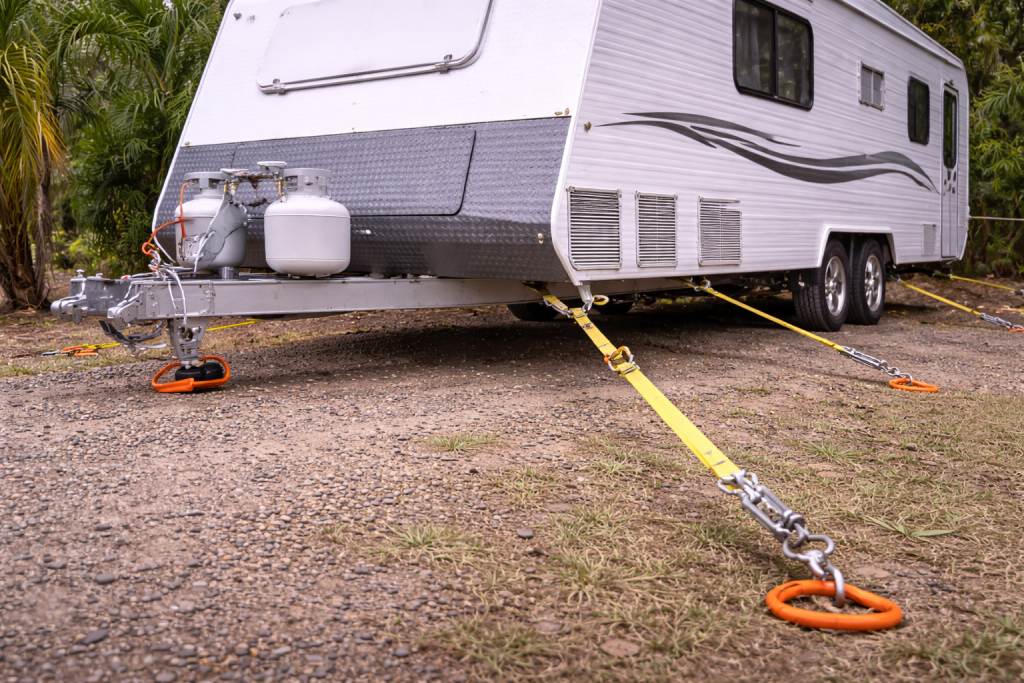
4. Secure the Caravan to the Ground
If the caravan remains outdoors:
- Use rated ground anchors or screw-in tie-downs
- Secure chassis, not just wheels
- Use multiple anchor points
Wheel chocks alone are not sufficient in cyclone conditions.
5. Seal Against Wind-Driven Rain
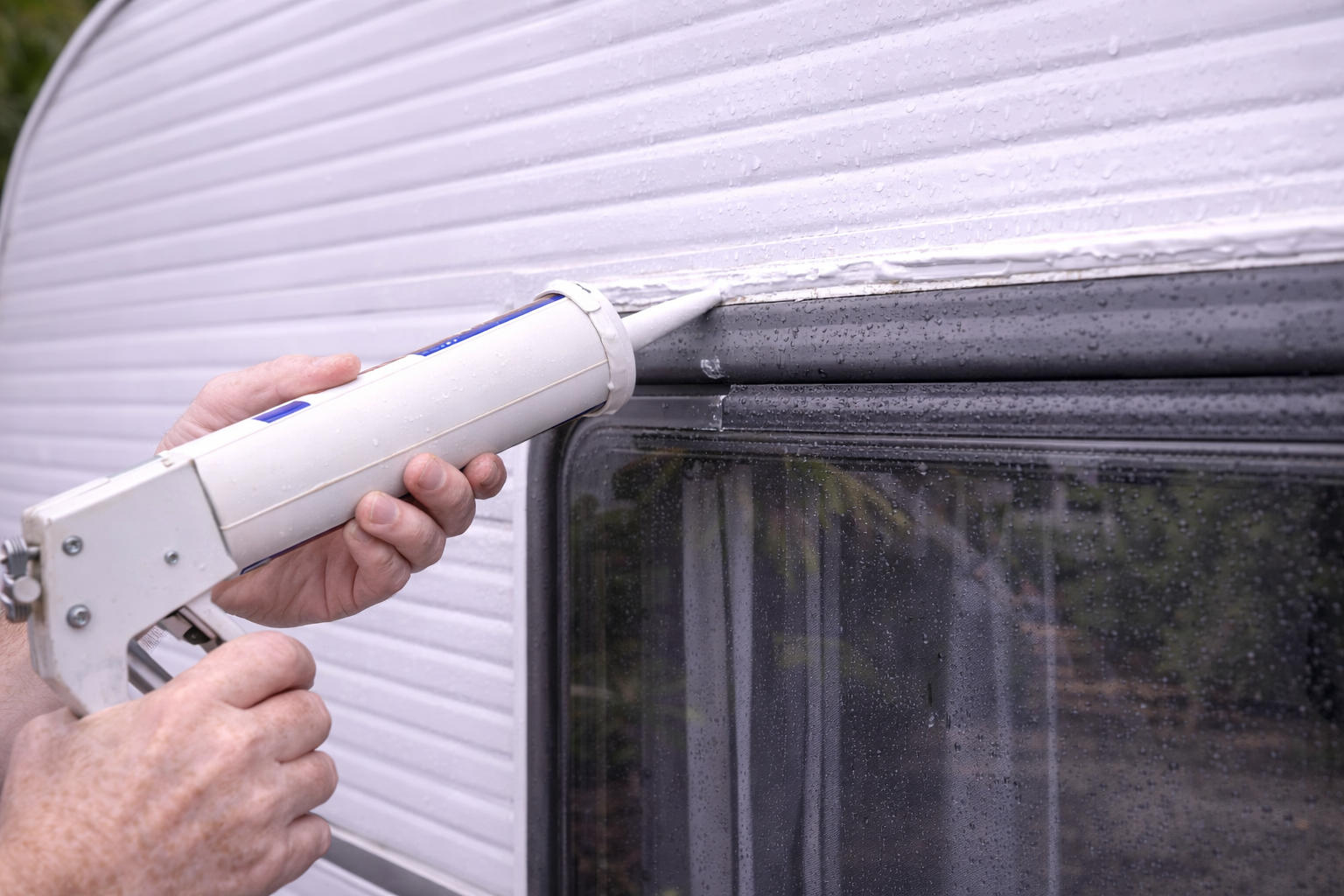
Cyclones force water into places rain normally can’t reach.
Before the season:
- Inspect window and hatch seals
- Repair cracked or lifting sealant
- Check roof penetrations
Small leaks become major internal damage during cyclones.
6. Protect Against Flooding
If flooding is possible:
- Avoid low-lying ground
- Consider relocating temporarily
- Elevate the caravan if practical
Floodwater causes:
- Structural damage
- Electrical failure
- Insurance complications
7. Disconnect Services and Power
Before a cyclone:
- Disconnect mains power
- Turn off and disconnect gas bottles
- Disconnect water hoses
This reduces fire risk and equipment damage.
8. Prepare the Interior
Inside the caravan:
- Remove loose items
- Secure cupboard contents
- Empty water tanks if relocation is likely
- Remove perishables
Movement and moisture inside the van cause secondary damage.
Insurance and Documentation (Often Overlooked)
Before cyclone season:
- Confirm your insurance covers cyclones
- Check storage location requirements
- Photograph the caravan condition
- Record serial numbers and accessories
This matters after, not before.
Common Mistakes to Avoid
- Leaving annexes attached “just in case”
- Relying on wheel chocks only
- Ignoring sealant because “it hasn’t leaked yet”
- Parking near trees or loose structures
- Waiting until a cyclone warning is issued
Preparation should happen before warnings.
When Professional Help Is Worth It
Consider professional assistance if:
- You’re in a high-risk zone
- The caravan is large or heavy
- Secure storage options are limited
- You want engineered anchoring
Cyclone preparation is about risk management, not pride.
Key Takeaways
- Wind causes most caravan cyclone damage
- Reducing lift and surface area is critical
- Proper anchoring matters more than weight
- Water ingress multiplies damage rapidly
- Early preparation gives real protection
Next Steps
If your seals need attention:
How to Reseal Caravan Windows and Hatches
If storing long-term:
How to Winterise Your Caravan Properly
For cyclone-ready storage advice:


