






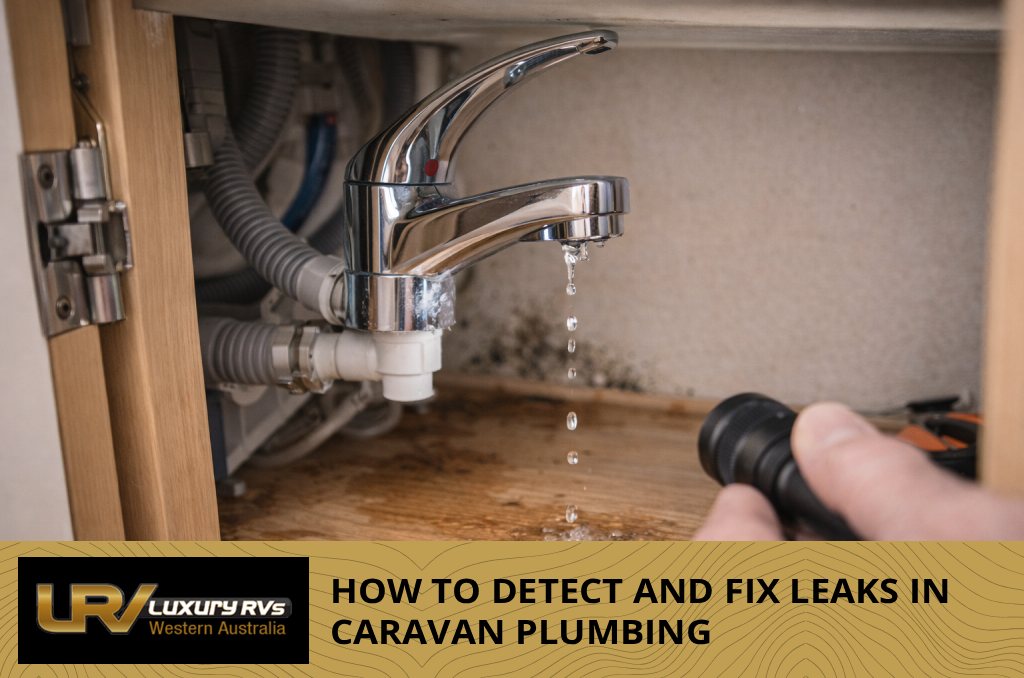
A small plumbing leak in a caravan can quickly turn into warped cabinetry, mould, electrical faults, or structural damage if left unchecked.
The tricky part? Many caravan leaks are hidden — behind cupboards, under beds, or inside wall cavities — and don’t show obvious signs until the damage is already done.
This guide walks you through how to detect, locate, and fix common caravan plumbing leaks using a logical, step-by-step approach.
What You’ll Learn
- Early warning signs of caravan plumbing leaks
- Where leaks most commonly occur
- How to isolate and test sections of your water system
- Which leaks you can safely fix yourself
- When it’s time to call a professional
This guide is suitable for all caravan owners, including beginners.
Step-by-Step: How to Find Caravan Plumbing Leaks
1. Check for Obvious External Signs
Start with a simple visual inspection.
Look for:
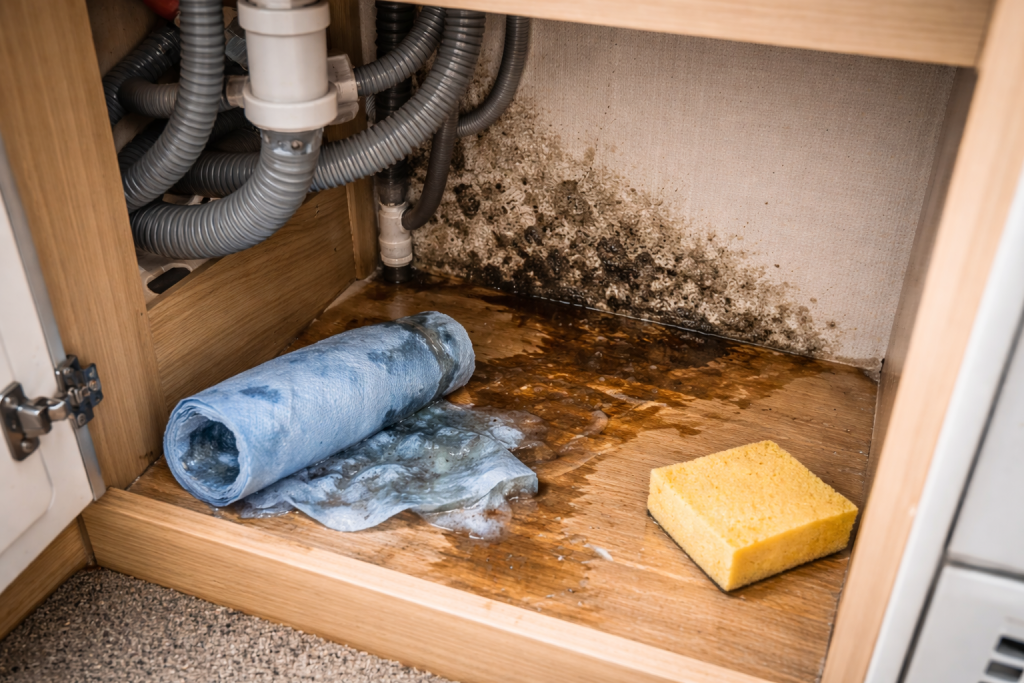
- Damp carpet or vinyl flooring
- Water stains inside cupboards or under beds
- Soft or swollen timber panels
- Musty smells or visible mould
Even minor dampness usually indicates an active or recent leak.
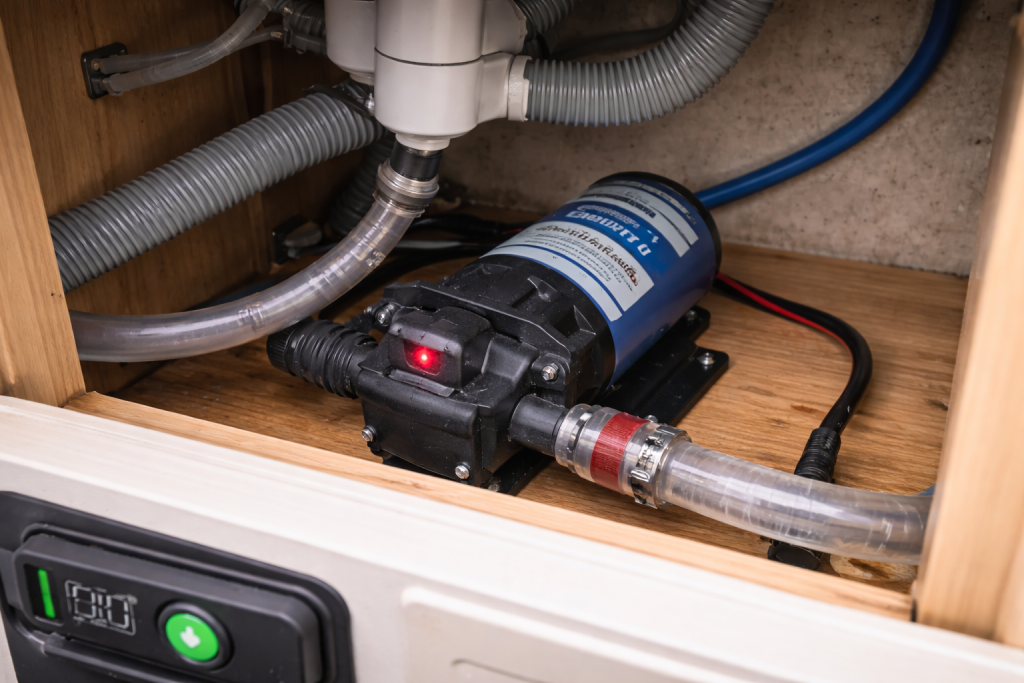
2. Turn Off All Taps and Listen to the Pump
With all taps fully closed:
- The water pump should stop running
- If it cycles on and off, you likely have a leak or pressure loss
This test is one of the fastest ways to detect hidden leaks.
If the pump continues to cycle:
- There may be a slow leak
- A cracked fitting
- A failing pump pressure switch
3. Inspect Common Leak Locations
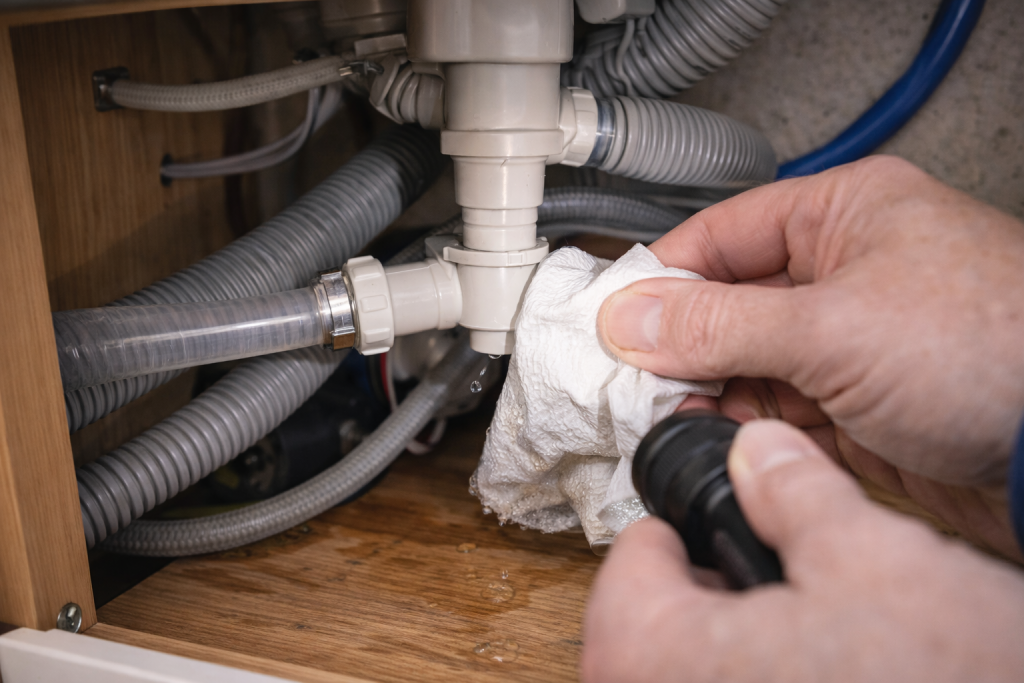
Most caravan plumbing leaks occur at:
- Push-fit hose connections
- Elbows and T-joints
- Tap and mixer bases
- Water pump inlet and outlet
- Hot water system fittings
Use a torch and feel around fittings with dry fingers or paper towel to detect moisture.
4. Check Under the Caravan and External Hatches
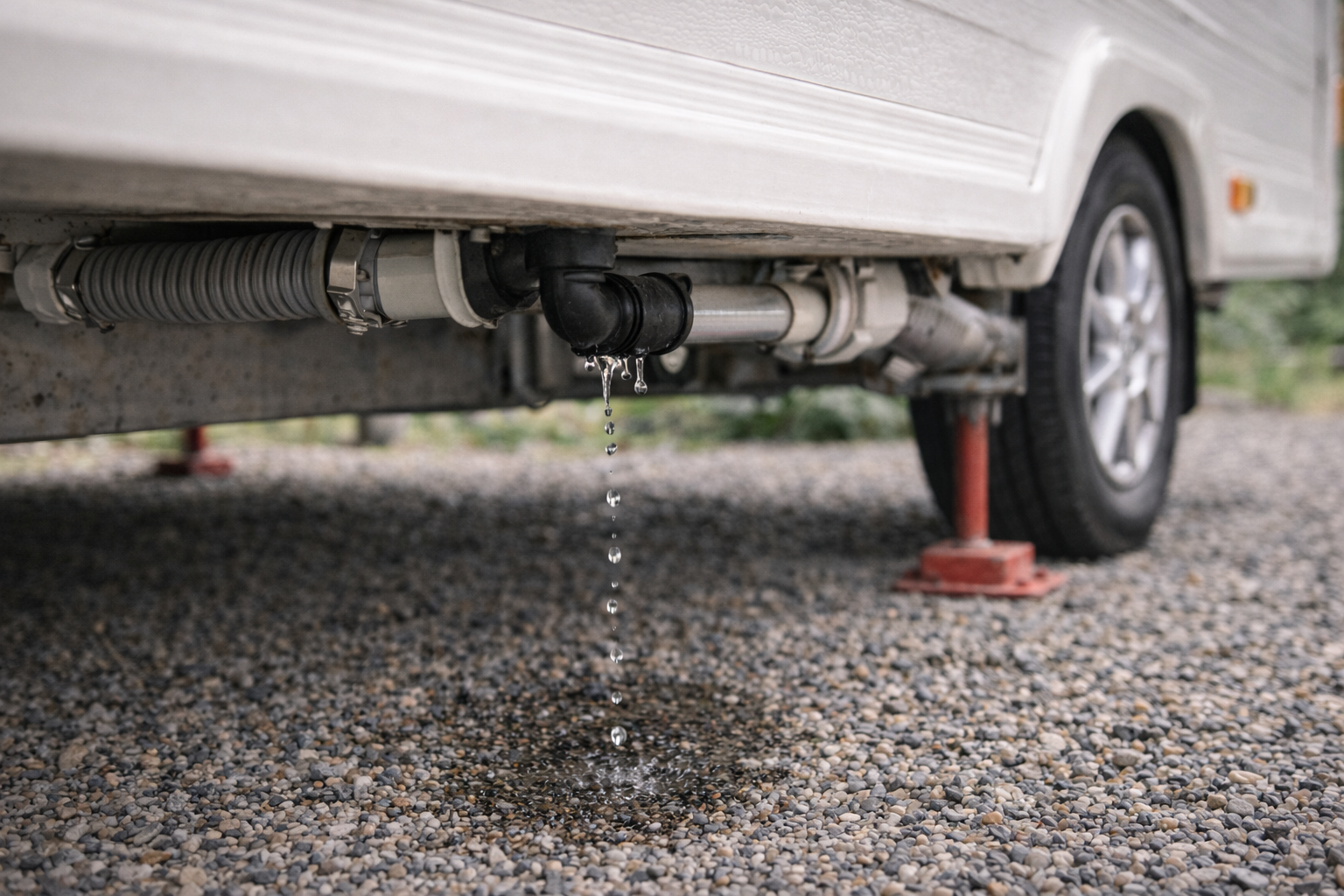
Some leaks only show externally.
Inspect:
- Under-floor plumbing runs
- Tank outlet fittings
- Drain points
- External shower connections
- Service hatches near water systems
Water dripping underneath the van often traces back to a loose internal fitting.
5. Isolate Sections of the Water System
If the leak isn’t obvious:
- Turn off individual isolation valves (if fitted)
- Test cold and hot systems separately
- Bypass the hot water system if possible
This process helps narrow down the exact location without dismantling everything.
How to Fix Common Caravan Plumbing Leaks
Tighten or Reseat Push-Fit Connections
Many caravan systems use push-fit fittings that can loosen with vibration.
Fix by:
- Turning off the pump
- Depressurising the system
- Removing and reseating the hose firmly
- Replacing damaged O-rings if needed
Replace Cracked or Kinked Hoses
Look for:
- Hairline cracks
- Flattened or kinked hoses
- Brittle plastic from age or UV exposure
Cut and replace damaged sections using compatible food-grade hose.
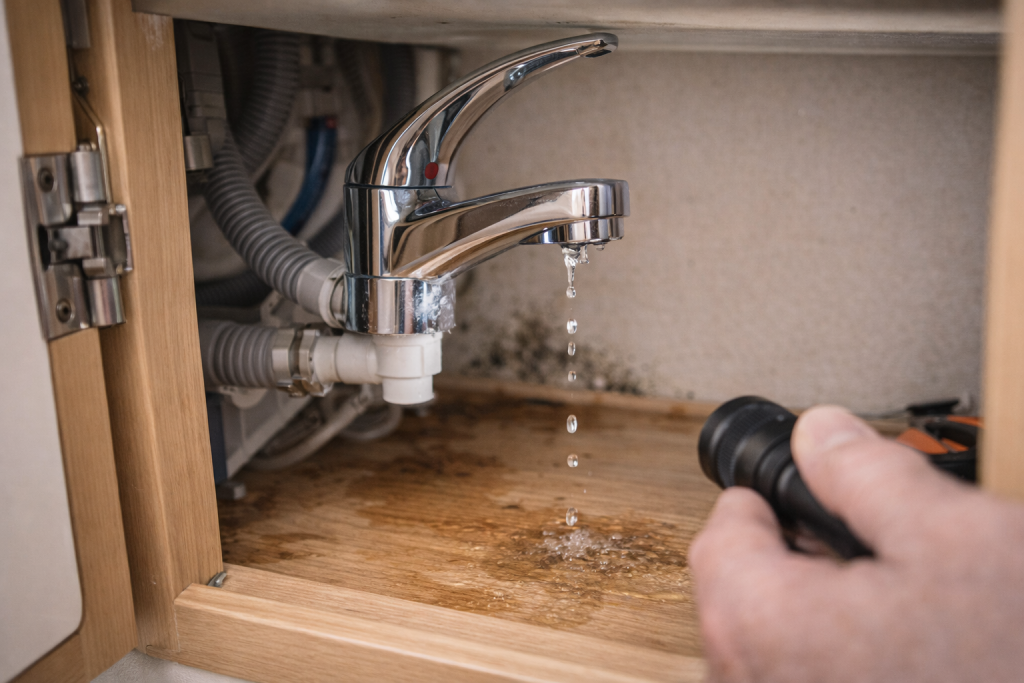
Fix Leaks at Taps and Mixers
Leaks around taps often come from:
- Loose mounting nuts
- Failed O-rings
- Cracked mixer bodies
Access is usually from inside cupboards or behind panels.
Inspect the Hot Water System
Check:
- Inlet and outlet fittings
- Pressure relief valve discharge
- Signs of corrosion or mineral buildup
Hot water system leaks should never be ignored, as pressure can worsen damage quickly.
Common Causes of Caravan Plumbing Leaks
| Symptom | Likely Cause |
| Pump cycling with taps off | Slow leak or pressure loss |
| Damp cupboards | Loose fitting or tap leak |
| Water under van | Tank or pipe connection leak |
| Hot water smell or steam | Hot water system fault |
| Intermittent leaks | Vibration-loosened fittings |
Common Mistakes to Avoid
- Ignoring minor dampness
- Overtightening plastic fittings
- Using household plumbing parts
- Running the pump with a known leak
- Delaying repairs after detection
Small leaks become expensive repairs very quickly.
When to Call a Professional
Book a service if:
- Leaks are inside walls or floors
- You can’t isolate the leak source
- Structural timber is wet or soft
- Hot water system is leaking
- Electrical components are affected
Hidden water damage can compromise safety and resale value.
Key Takeaways
- Pump cycling is an early leak warning
- Most leaks occur at fittings, not pipes
- Vibration is a major cause of loosening
- Early detection prevents major damage
- Isolation testing saves time and guesswork
Next Steps
No water coming through caravan taps?
No Water Coming Through Caravan Taps? Troubleshooting Guide
Grey water smells in your caravan?
Grey Water Smells in Your Caravan? Here’s How to Fix It
For persistent or hidden leaks:


