






Smart lighting and digital power switches are becoming more common in modern vans — but not every setup adds real convenience.

Some systems genuinely improve comfort and usability. Others add complexity without much payoff.
This guide breaks down:
- What smart lighting actually helps with
- When power switches and control panels are worth fitting
- Common mistakes with smart setups
- How to choose systems that make van life easier, not harder
What Smart Lighting Is Good For
Smart lighting is about convenience and atmosphere, not necessity.
It’s mainly useful for:
- Adjusting brightness levels
- Creating ambient lighting at night
- Reducing harsh overhead lighting
- Improving usability in compact spaces
It doesn’t save power by default — it just gives you more control.
Smart Lighting Pros & Cons

Pros
- Better lighting control
- Softer, more comfortable light
- Easy mood changes
- Modern look and feel
Cons
- More components to fail
- Setup can be confusing
- Limited benefit if poorly designed
Good lighting design matters more than how “smart” it is.
Smart Power Switches: Convenience, Not Magic
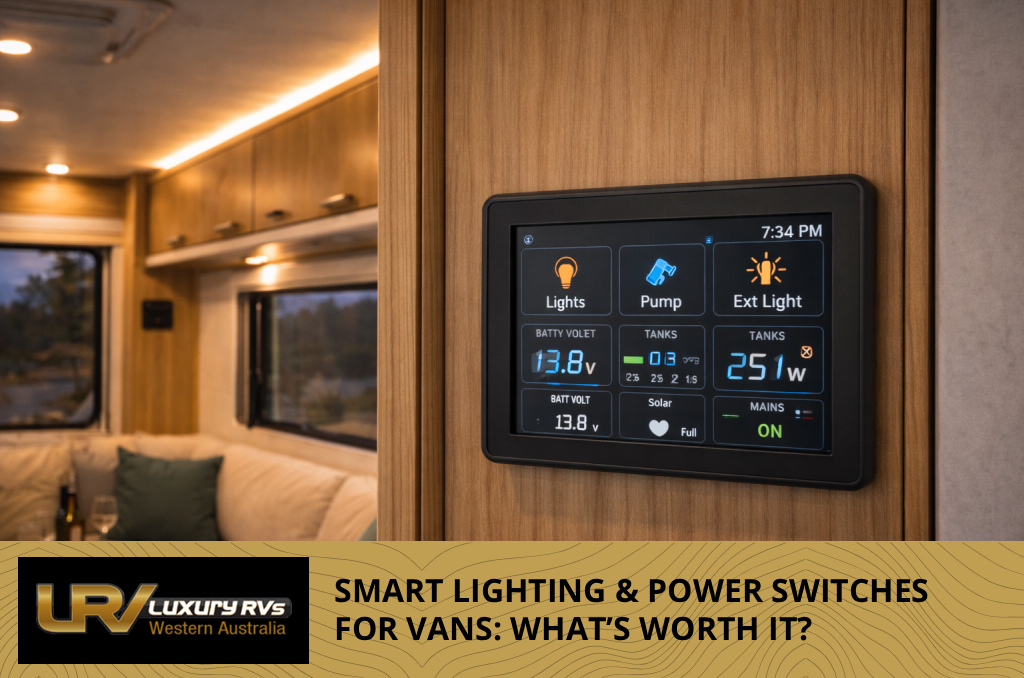
Smart power switches and control panels centralise systems like:
- Lights
- Water pump
- Fans
- External lights
They don’t generate power — they just manage it more neatly.
Simple Switches vs Central Control Panels

Simple switches
- Reliable
- Easy to troubleshoot
- Familiar to use
Centralised panels
- Cleaner look
- Faster access to systems
- More electronics involved
For many vans, a mix of both works best.
Placement Matters More Than Features
Even the best system is frustrating if it’s badly positioned.
Best practices:
- Controls near entry points
- Easy access from bed and seating
- Clear labelling
- No screen glare at night
Poor placement causes more annoyance than lack of smart features.
When Smart Systems Aren’t Worth It
You may not need smart lighting or switches if:
- You prefer simple, manual controls
- You travel mostly during daylight hours
- You want maximum reliability
Sometimes fewer systems mean fewer headaches.
Common Mistakes with Smart Van Systems
- Overcomplicating basic functions
- Relying on touchscreens only
- Ignoring redundancy
- Prioritising features over usability
Smart systems should simplify life — not add friction.
Simple Recommendation That Works
For most van owners:
- Smart lighting → Nice upgrade
- Central power panel → Optional
- Fully integrated systems → Situational
Focus on usability, reliability, and layout first.
Final Word
Smart lighting and power switches can improve comfort and convenience in a van — if they’re chosen and installed thoughtfully.
If you’re unsure which systems suit your van layout and travel style, the team at Luxury RVs WA can help you choose options that add comfort without unnecessary complexity.
Please contact us and start your next adventure today!


