





A good reversing camera doesn’t just help you park — it reduces stress, improves safety, and makes caravan travel far more enjoyable.

Reversing a caravan is one of the most intimidating parts of caravanning — especially for first-time owners.
Limited visibility, blind spots, and miscommunication between driver and spotter can quickly turn a simple manoeuvre into a stressful experience. A quality reversing camera removes much of that uncertainty by giving you clear, real-time visibility of what’s happening behind the van.
This guide covers the top reversing camera options for caravans, what features actually matter, and how to choose a setup that suits how you travel.
Why Reversing Cameras Matter for Caravans
Caravans create:
- Large blind spots
- Limited rear visibility
- Increased risk when reversing or hitching
A reversing camera helps:
- Prevent collisions
- Protect people, vehicles, and campsites
- Reduce reliance on hand signals
- Make solo reversing far easier
For many caravanners, it becomes a non-negotiable safety tool.
Types of Reversing Cameras for Caravans

Wired Reversing Cameras
Best for: Reliability and consistent signal
Pros:
- Stable connection
- No interference
- Clear image quality
Cons:
- More complex installation
Wireless Reversing Cameras
Best for: Easier installation
Pros:
- Faster install
- Less cabling
Cons:
- Potential signal dropouts
- Interference over long distances
Long caravans often perform better with wired systems.
Key Features to Look For

Wide Viewing Angle
A wider field of view helps you see:
- Obstacles
- Campsite edges
- People behind the van
Avoid extreme fisheye distortion.
Night Vision & Low-Light Performance
Good cameras should:
- Work at dusk or night
- Handle shadows and glare
Infrared or low-light sensors are valuable.
Monitor Size & Clarity
Look for:
- Clear resolution
- Glare-resistant screens
- Easy-to-read distance markers
A poor monitor defeats the purpose of a good camera.
Weather Resistance
Caravan cameras are exposed to:
- Dust
- Rain
- Road grime
Durable housings matter for long-term reliability.
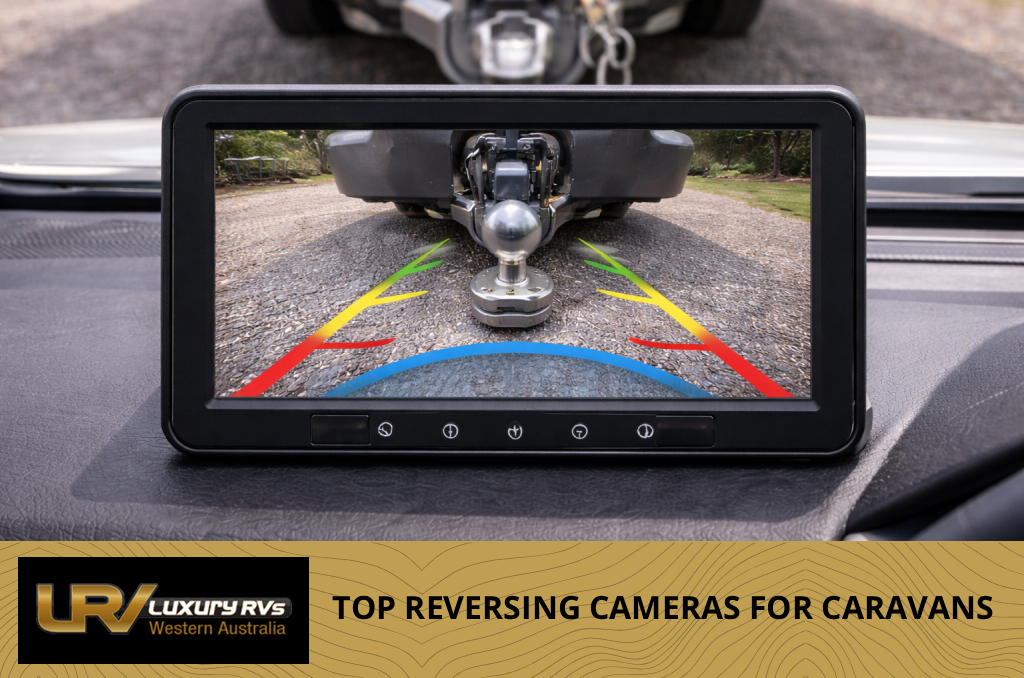
Reversing Camera vs Hitch Camera
Some setups include:
- A rear reversing camera
- A secondary hitch camera

A hitch camera:
- Makes coupling easier
- Reduces frustration
- Is ideal for solo travellers
It’s not essential, but it’s a strong upgrade.
Common Reversing Camera Mistakes
- Relying on camera alone without mirrors
- Poor camera placement
- Choosing wireless for very long vans
- Ignoring screen glare in daylight
Cameras support awareness — they don’t replace it.
Are Reversing Cameras Worth It?
For caravans, absolutely.
A good reversing camera:
- Improves safety
- Reduces stress
- Saves time
- Makes solo travel easier
It’s one of the most appreciated upgrades caravanners make.
Setting Up Your Caravan for Easy Manoeuvring?
Reversing cameras are part of a broader visibility setup that includes mirrors, TPMS, and correct towing geometry.
If you’re exploring caravans designed with modern safety and visibility features in mind, speak with the team at Luxury RVs WA about setups that suit how and where you travel.
Please contact us and start your next adventure today!


