




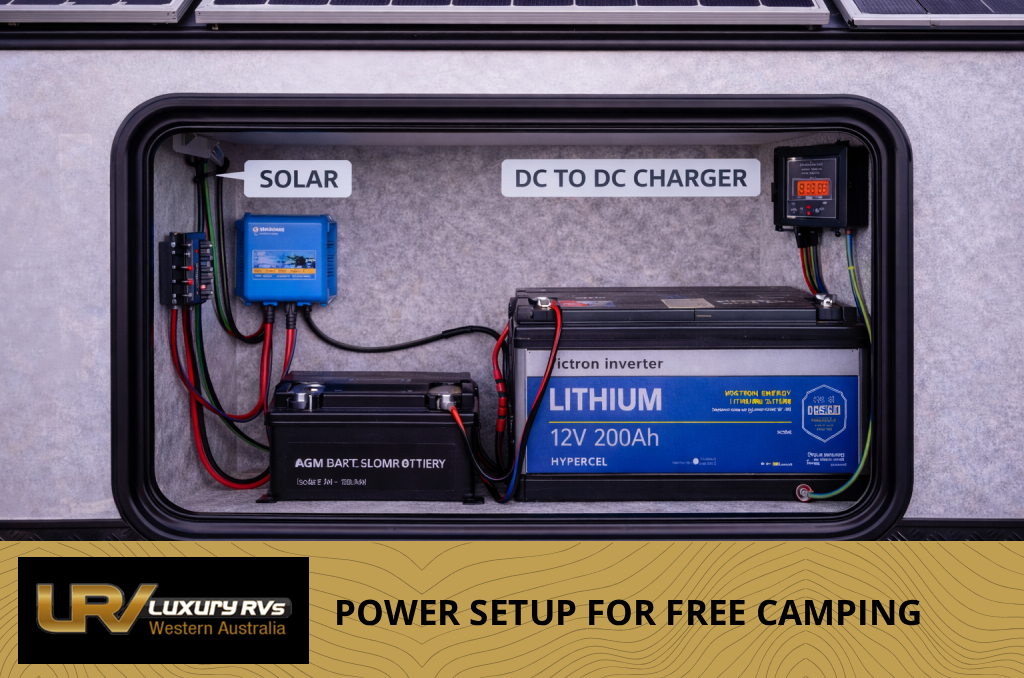
A reliable free camping power setup isn’t about one big upgrade — it’s about how solar, batteries, charging, and usage all work together as a system.

Free camping gives you freedom — but only if your power setup can support how you actually travel.
Too many caravans are either underpowered, overcomplicated, or built around individual components instead of a complete system. The result is flat batteries, constant compromises, or expensive upgrades that don’t quite deliver.
This guide breaks down a practical power setup for free camping, including:
- Essential gear
- Optional upgrades
- Example configurations for different travel styles
No hype — just real-world setups that work.
The Four Core Parts of Any Free Camping Power System
Every off-grid caravan power setup is built around the same four elements:
- Battery storage – where power is stored
- Charging sources – how power gets in
- Power conversion – how power is used
- Monitoring & protection – how the system stays healthy
Miss one, and the system suffers.
1. Battery Storage: The Foundation

AGM Batteries
- Lower upfront cost
- Heavier
- ~50% usable capacity
Suitable for:
- Short trips
- Occasional free camping
- Lower power use
Lithium Batteries
- Higher upfront cost
- Much lighter
- 80–100% usable capacity
- Fast charging
Best for:
- Regular free camping
- High power use
- Long-term touring
Rule of thumb:
If you free camp often, lithium pays for itself in usability.
2. Charging Sources: Keeping Batteries Full

Solar (Primary Source)
Common setups:
- Roof-mounted solar: Set-and-forget
- Portable panels or blankets: Flexible, shade-friendly
- Hybrid: Best of both
Solar keeps you off-grid — but only if sized properly.
Vehicle Charging (DC to DC)
A DC to DC charger:
- Ensures correct charging
- Works with modern vehicles
- Is essential for lithium
Battery isolators are no longer suitable for most setups.
240V Mains (When Available)
Used to:
- Fully top up batteries
- Balance cells
- Reduce wearvb
Not part of free camping — but important for system health.
3. Power Conversion: Using the Power

12V Appliances
Always prioritise:
- 12V fridges
- LED lighting
- USB charging
They’re efficient and battery-friendly.
Inverters (240V Power)
Used for:
- Coffee machines
- Microwaves
- Power tools
Common inverter sizes:
- 1500W: Light use
- 2000W: Most caravans
- 3000W: High-demand setups
Inverter size must match battery capacity, not just appliances.
4. Monitoring & Protection: Avoiding Problems
A good system includes:
- Battery monitor
- Correct fusing
- Proper cabling
- Adequate ventilation
These don’t add glamour — but they prevent failures.
Example Power Setups for Free Camping
Setup 1: Weekend Free Camper
Best for: Short trips, low power use
Typical gear:
- AGM battery bank
- 200W roof solar
- Basic inverter (optional)
- Simple battery monitor
Setup 2: Regular Free Camper
Best for: Frequent off-grid stays
Typical gear:
- 100–200Ah lithium battery
- 300–400W solar (roof + portable)
- DC to DC charger
- 2000W inverter
- Battery monitor
This is the most common “sweet spot” setup.
Setup 3: Long-Term Off-Grid Touring
Best for: Extended remote travel
Typical gear:
- 200–400Ah lithium
- 500W+ solar
- DC to DC + mains charging
- 3000W inverter
- Full monitoring and protection
Built for independence — not compromise.
Common Free Camping Power Mistakes
- Overspending on batteries but undersizing solar
- Installing big inverters with small battery banks
- Ignoring charging limitations
- Assuming solar works instantly
- Treating power upgrades as standalone fixes
Systems fail when components aren’t matched.
How to Choose the Right Setup for You
Ask yourself:
- How many days do I free camp in a row?
- What appliances do I actually use?
- Do I travel in shade or sun?
- Do I want simplicity or flexibility?
The right setup supports your habits — not someone else’s.
Planning a Free Camping Power System?
The best free camping setups are designed as complete systems, not piecemeal upgrades.
If you’re looking at caravans built with proper off-grid power systems — balanced, integrated, and designed for WA conditions — explore the range at Luxury RVs WA or speak with the team about setups that suit how you travel.
Please contact us and start your next adventure today!


